

- About Us
- Hotels
- Resorts
- Excursions
- Car Hire
-
Blog
- Food & Drink
- Things to do in Iceland
- Iceland Holidays
- Iceland Volcano Latest News
- People & Places in Iceland
- Climate, Geology & Seismic Activity in Iceland
- Travel & Hotels in Iceland
- Northern Lights in Iceland
- Reviews
- Icelandic Culture & History
- Landscape & Wildlife in Iceland
- Blue Lagoon and Hot Springs
- Corporate Incentive Group Trips to Iceland
- Iceland and COVID-19
- Geysir Geothermal Area Iceland
- Super Jeep Tours
- Films & TV Shot on Location in Iceland
- Contact Us
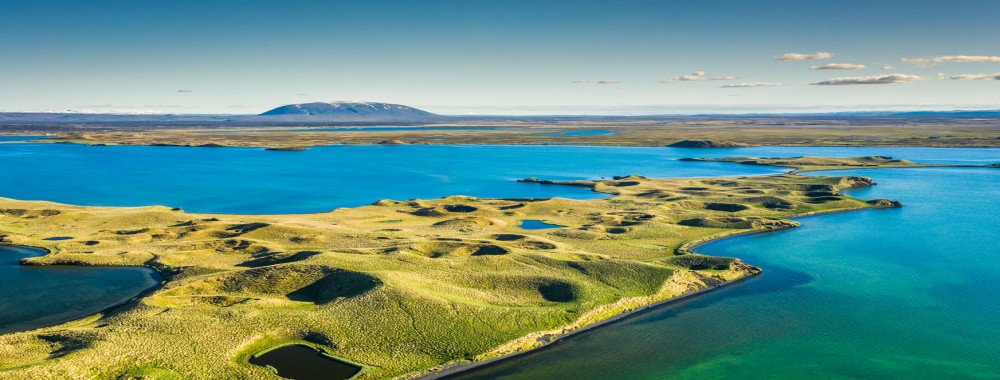
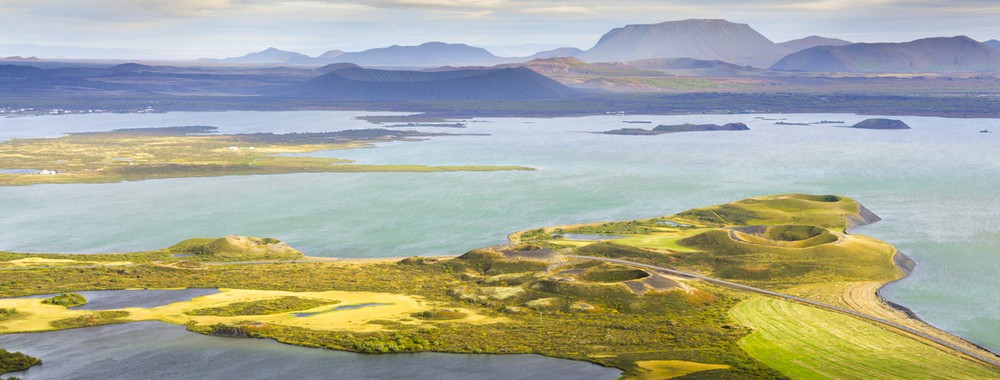
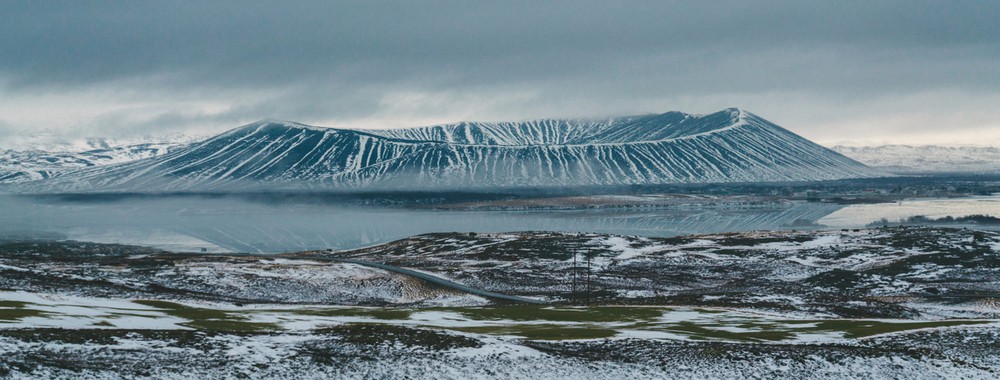
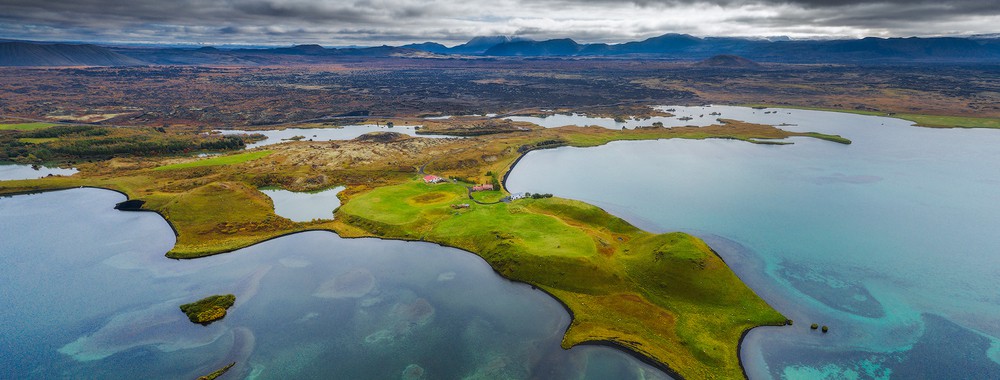
Enjoy an amazing journey through area of extreme contrasts, bird life, flora, geothermal activity, geology and saga. The Lake Myvatn area is by many considered the most beautiful and at the same time the most catastrophic place in Iceland
Tour by Minibus includes Lake Myvatn Classic Goðafoss, Gervigígar, Dimmuborgir, Grjótagjá, Námaskarð, Hverir and Mývatn Nature baths
Tour Duration: 8 hours
Goðafoss
Goðafoss Waterfall is one of the most beautiful waterfalls in Iceland. Nicknamed the Waterfall of the Gods due to its history. In the year 1000, Þorgeir Ljósvetningagoði made Christianity the official religion of Iceland and proceeded with throwing his statues of gods into the waterfall.
The water falls from a height of 12 meters over a width of 30 meters.
Skútustaðagígar
Pseudo craters are geological formations that are rare nationally as well as globally. Pseudo craters are rare lava formations formed by steam explosions where thin-flowing lava flows over lakes and swamps. The craters are among the most significant natural monuments in Iceland and by Lake Mývatn they are particularly beautiful in shape and form the framework of the lake.
Dimmuborgir
Dimmuborgir was formed in an eruption that occurred
in the area 2,300 years ago.
As lava flowed across the area, it passed over a lake, causing it to boil. This both quickened the cooling of the lava and caused pillars of steam to shatter parts of it. After it solidified, the Dimmuborgir area became defined by large stacks of rock and many caves and caverns, caused by bubbles of intense steam.
As such, many have compared Dimmuborgir to a medieval castle, with its many hidden chambers and its rising towers.
Grjótagjá
Grjótagjá is a small lava cave near Lake Mývatn in Iceland. It has a thermal spring inside. In the early 18th century the outlaw Jón Markússon lived there and used the cave for bathing. Until the 1970s Grjótagjá was a popular bathing site.
Hverir
Hverir Geothermal Area is located in Northeast Iceland.
You can see many smoking fumaroles and boiling mud pots, surrounded by sulphur crystals of many different colours. Sulphur gives the area an overwhelming smell.
- View all our latest offers here
-
Reykjavik City Breaks
from £599.00 View offers -
Fly Drive Holidays Iceland
from £679.00 View offers -
Guided Iceland Bus Tours
from £649.00 View offers -
Luxury Iceland Breaks
from £800.00 View offers -
Northern Lights Holidays Iceland
from £599.00 View offers -
Top 10 Iceland Holidays
from £699.00 View offers -
North Iceland Holidays
from £999.00 View offers -
Group Travel & Solar Eclipse Iceland 2027
from £849.00 View offers
Call us on +44 (0) 1773 850222
 ATOL Protected
Thank you so much Gareth for organising such a lovely holiday for us! We gave a basic outline of what we wanted from our holiday and Gareth organised everything. Everything ran very smoothly and what an amazing experience. Thank you for all your suggestions, so glad we took them on
We are here to reassure you that you can trust our team with your Iceland holiday plans, knowing that all bookings with us are ATOL protected